
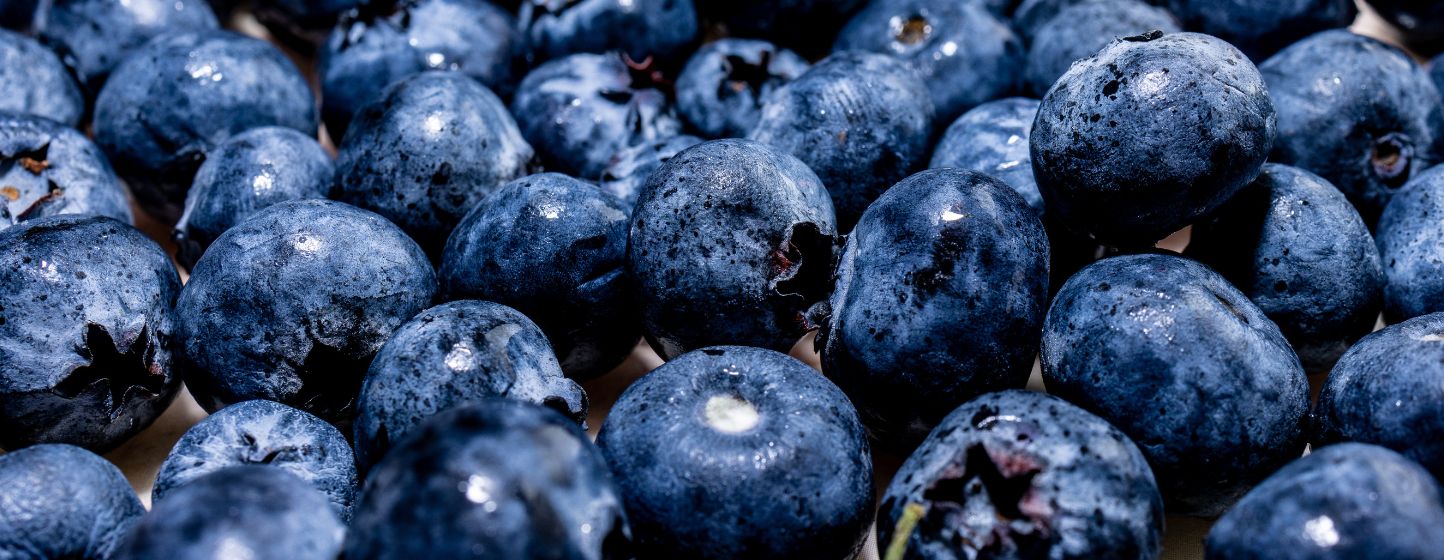
Long associated with the “superfood” trend, blueberries have now become a firmly established product—available year-round on retail shelves and expected by increasingly discerning consumers.
This new phase is not driven by volume growth alone. It is underpinned by a profound transformation: greater consistency, higher quality, sharper segmentation, and stronger strategic thinking. Many industry players now speak of a true “Blue Renaissance.”
1) A paradigm shift: from quantity to consistency
For years, the sector operated under a volume-driven logic. In 2025, the market has delivered a clear message: irregular or low-quality fruit no longer finds acceptance—even at discounted prices.
As a result, varietal renewal has accelerated and the market has become more structured:
- Lower-performing varieties are increasingly redirected toward frozen and processed channels.
- The fresh segment is focusing on premium blueberries—more uniform, higher-value, and often marketed under branded programs.
2) A reshaped global map to mitigate risk
Another defining trend of 2025 is geographic diversification. Faced with logistical and trade uncertainties, exporters are seeking to reduce their dependence on traditional markets.
Two regions stand out:
- Asia, gaining momentum as a key growth market.
- Africa, confirming its production potential and continues to confirm its production potential and is emerging as a strategic sourcing region, supported by complementary harvest windows and steadily improving quality. Morocco is sustaining strong growth, driven by its logistical proximity to Europe and its ability to supply premium fruit during key market periods. Zimbabwe has stood out as the breakout origin of the year, leveraging its favorable climate and newly secured market access, particularly into Asia. This momentum serves a clear objective: diversifying origins to secure supply and reduce commercial and logistical risks.
The objective is straightforward: to prevent port disruptions, trade tensions, or regulatory changes from jeopardizing an entire season.
3) Peru and the stabilization of supply
Any discussion of 2025 would be incomplete without addressing Peru’s influence. In recent years, highly concentrated shipment windows have often exerted downward pressure on prices.
In 2025, the approach has evolved. Improved agronomic practices and better-adapted varieties are allowing production to be spread over a longer period, helping to smooth supply and provide retailers with greater predictability.
4) A changing consumer: blueberries as an “experience”
Blueberries are no longer purchased solely for their health benefits. Today’s consumer is looking for:
- Flavor,
- A pleasant texture,
- A convenient “snacking” experience.
This shift is pushing the market upmarket: larger calibers, organic offerings, flavor-driven brands, and stricter quality standards. The strategic challenge is clear—how to expand supply without eroding value.
5) Technology: towards a more efficient value chain
Finally, 2025 confirms the acceleration of technological adoption across the sector: intelligent sorting, automation, and more precise quality-control tools. The goal is unambiguous—to improve efficiency while ensuring consistent quality, despite rising cost pressures and labor constraints.