
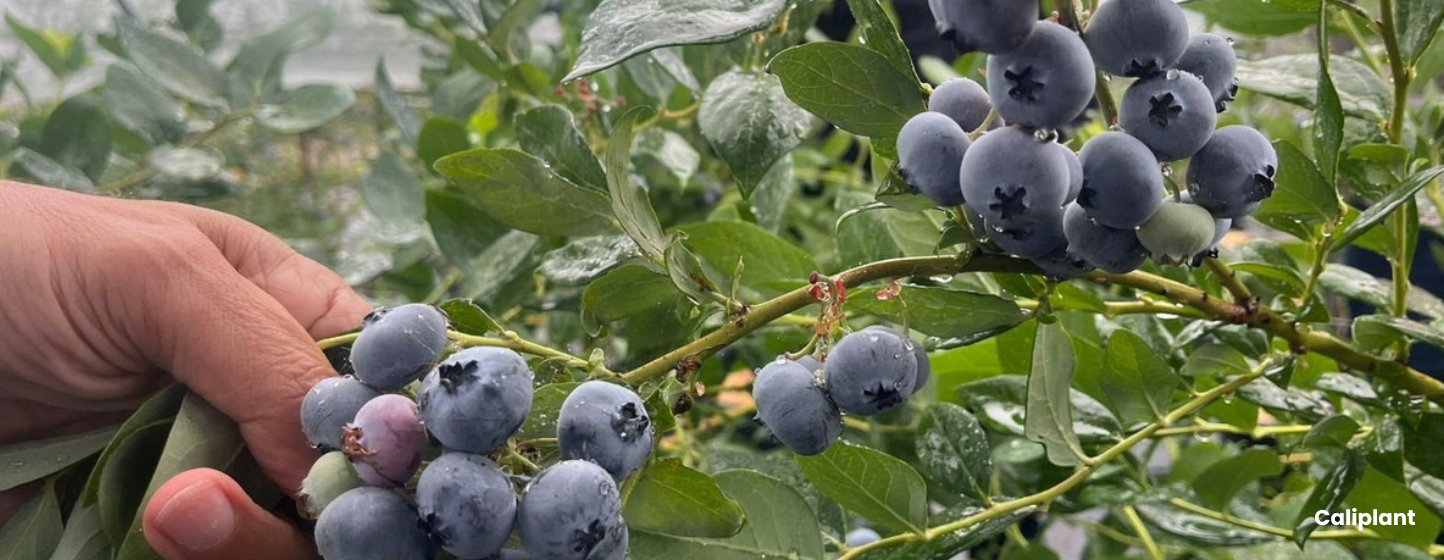
Matías™ comes from a genetics programme originally initiated by the University of Georgia and later strengthened through Inka’s Berries in Peru. In October 2024, after Bloom Fresh™ acquired this breeding programme, Matías™—along with other varieties—further reinforced the company’s positioning in the premium fruit segment and supported the international expansion of its blueberry genetics portfolio.
Today, Bloom Fresh™ and Caliplant Group are working together to commercialise the variety in Europe and North Africa, with feedback described as very positive based on trial results.
Built to handle extremes
“Its genetics were designed to be very robust and productive, with remarkably simple crop management,” says José María Martín Santana, Technical and R&D&I Manager at Caliplant Group for Spain and Morocco. He notes that trials conducted in Huelva and Morocco—two regions with very different climates—were key in positioning Matías™ as a solid option for growers.
The variety has shown strong tolerance to sudden temperature swings, coping both with occasional winter cold spells in Huelva and heat peaks reaching 50°C in Agadir.
This hardiness is partly linked to its origin: early selection work took place in Peru under particularly demanding conditions, targeting plants able to tolerate high humidity (which increases fungal pressure) and heat stress. As a result, Matías™ is reported to show low sensitivity to certain common blueberry fungal diseases, such as powdery mildew.
Lower losses from thrips—and more flexibility on water quality
Another highlight is its performance against thrips, one of the most challenging pests in soft fruit. Comparative trials suggest Matías™ performs better than standard control varieties, which could help reduce losses and simplify crop protection.
The variety is also said to tolerate medium-quality water, including desalinated water—an important advantage in water-stressed regions. The goal is a variety that remains adaptable, stable and consistent throughout the season.
Vigour, yield and large fruit size
On the plant side, Matías™ is described as having balanced vigour and a strong root system. In production, trials report yields exceeding 4.5 kg per plant from the second year—above initial expectations.
Presented as a “zero-chill” variety (no chill requirement), Matías™ is early, with fruit available from November. Around 70–75% of production is said to be concentrated between January and April/May.
On fruit quality, it clearly targets the premium segment: berries measuring 16–24 mm, with 70% of the crop above 18 mm, a very sweet flavour profile, and sugar levels around 13–14 °Brix.
A key advantage: over 55 days of shelf life
Matías™ also stands out for post-harvest performance: it is reported to remain in good condition for more than 55 days in storage, without significant loss of firmness or eating quality.
Fruit architecture is presented as another benefit: flowering is well distributed along productive canes, without overly tight clusters. This facilitates picking, increases harvesting speed, and could bring harvest forward by 10–12 days, while reducing labour costs.
Plant availability announced for October 2026
Early commercial feedback on initial volumes is described as very positive. Bloom Fresh™ also highlights a more open access strategy than some premium systems built around sub-licensing reserved for large groups, aiming to help growers of different sizes remain competitive on the European market.
As a result of strong interest, plants available for the current season are reportedly already fully booked. Growers wishing to plant Matías™ will need to wait until October 2026, when new plant material is expected to become available again—along with a recommendation to book early given demand.